
Raising the Bar in GxP Compliance – Part 37: EU GMP Annex 1 vs FDA Aseptic Manufacturing Guidance
Welcome to the thirty-seventh instalment of Raising the Bar in GxP Compliance, Rephine’s expert-led blog series for QA and regulatory professionals. In this edition, we examine how the EU GMP Annex 1 (2022 revision) and the FDA’s aseptic processing guidance differ — and where they align. With both frameworks setting the bar for sterile manufacturing, multinational companies must harmonise their contamination control, validation, and risk management strategies. Discover how Rephine helps manufacturers bridge global expectations and build inspection-ready systems that meet both EU and U.S. standards.
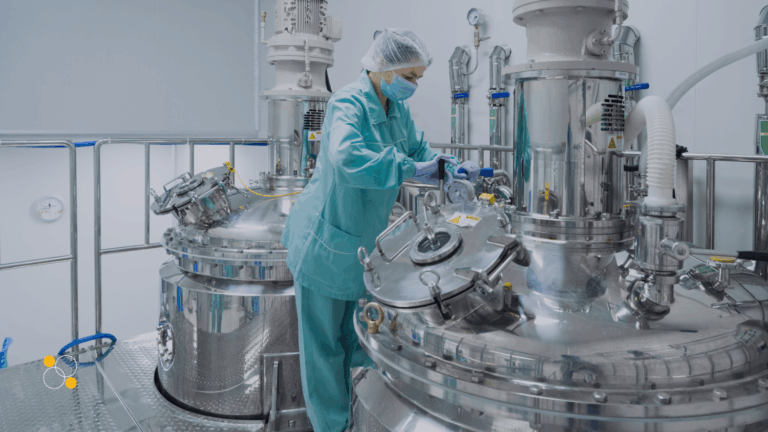
Sterile manufacturing compliance is a global challenge.
Understanding how EU GMP Annex 1 and FDA guidance differ — and where they align — is key to building a unified contamination control strategy and inspection-ready operations.
Sterile manufacturing remains one of the most tightly regulated areas of the pharmaceutical industry. Both the EU GMP Annex 1 (2022 revision) and the USFDA Guidance for Industry: Sterile Drug Products Produced by Aseptic Processing (2004, with updates) set out stringent requirements. While both frameworks share common goals—ensuring sterility assurance and patient safety—there are important differences that multinational manufacturers must navigate.
Why Comparing EU Annex 1 and FDA Guidance Matters
- Global supply chains require compliance with both EU and U.S. regulators.
- Differences in terminology, approach, and inspection focus can create uncertainty.
- A harmonised strategy reduces duplication, lowers compliance risk, and supports faster product approvals.
EU vs FDA: Key Areas of Aseptic Manufacturing Comparison
Contamination Control Strategy (CCS)
- Annex 1: Mandates a formal, site-wide CCS integrating environmental monitoring, facility design, and personnel practices.
- FDA: Discusses contamination control principles but does not require a formal CCS document.
Environmental Monitoring (EM)
- Annex 1: Requires continuous monitoring in Grade A and more prescriptive EM frequency.
- FDA: Less prescriptive, allowing firms to justify EM frequency through risk-based approaches.
Aseptic Process Simulation (APS / Media Fills)
- Annex 1: Specifies frequency (twice per year per line), with detailed requirements for interventions.
- FDA: Requires media fills “at least semi-annually” but is more flexible on scope and execution.
Technologies & Innovation
- Annex 1: Encourages use of barrier technologies (RABS, isolators) and advanced monitoring.
- FDA: Supports innovation but focuses on principles of aseptic control rather than prescriptive tech use.
- Quality Risk Management (QRM)
- Annex 1: Explicitly integrates ICH Q9(R1) principles throughout.
- FDA: Mentions risk-based approaches but less formally tied to ICH guidance.
Terminology and Style
- Annex 1: Prescriptive, detailed requirements.
- FDA: Guidance-based, emphasising scientific justification and flexibility.
Practical Implications for Global Sterile Manufacturers
- Companies must align SOPs and practices to meet both sets of expectations.
- CCS documentation is non-negotiable in the EU but highly recommended globally.
- Harmonising EM and APS strategies can avoid duplication.
- Training must address both prescriptive EU and principle-based U.S. mindsets.
How Rephine Supports Annex 1 and FDA Compliance Alignment
Rephine supports sterile manufacturers by:
✅ Conducting Annex 1 readiness assessments and FDA gap analyses.
✅ Designing global contamination control strategies that satisfy both regulators.
✅ Providing mock inspections tailored to EU and U.S. expectations.
✅ Training cross-functional teams to adapt to both prescriptive and flexible regulatory frameworks.

About the Author:
Dr. Eduard Cayón is the Chief Scientific Officer (CSO) at Rephine, a global leader in GxP compliance and quality assurance.
We don’t just deliver audits or consultancy services — we partner with clients at every stage of their quality journey, offering end-to-end solutions that empower confidence and compliance.
With over 25 years of experience, Rephine has built an enviable reputation as the gold standard in the industry operating from four primary locations: Stevenage in the UK, Barcelona in Spain, India, and Shanghai in China.
Dr. Cayón, who holds a Ph.D. in Organic Chemistry, is a deeply experienced pharmaceutical industry consultant and auditor.
He is dedicated to supporting pharmaceutical, biotech, and medical device companies in meeting the highest standards of manufacturing and supply chain integrity.
